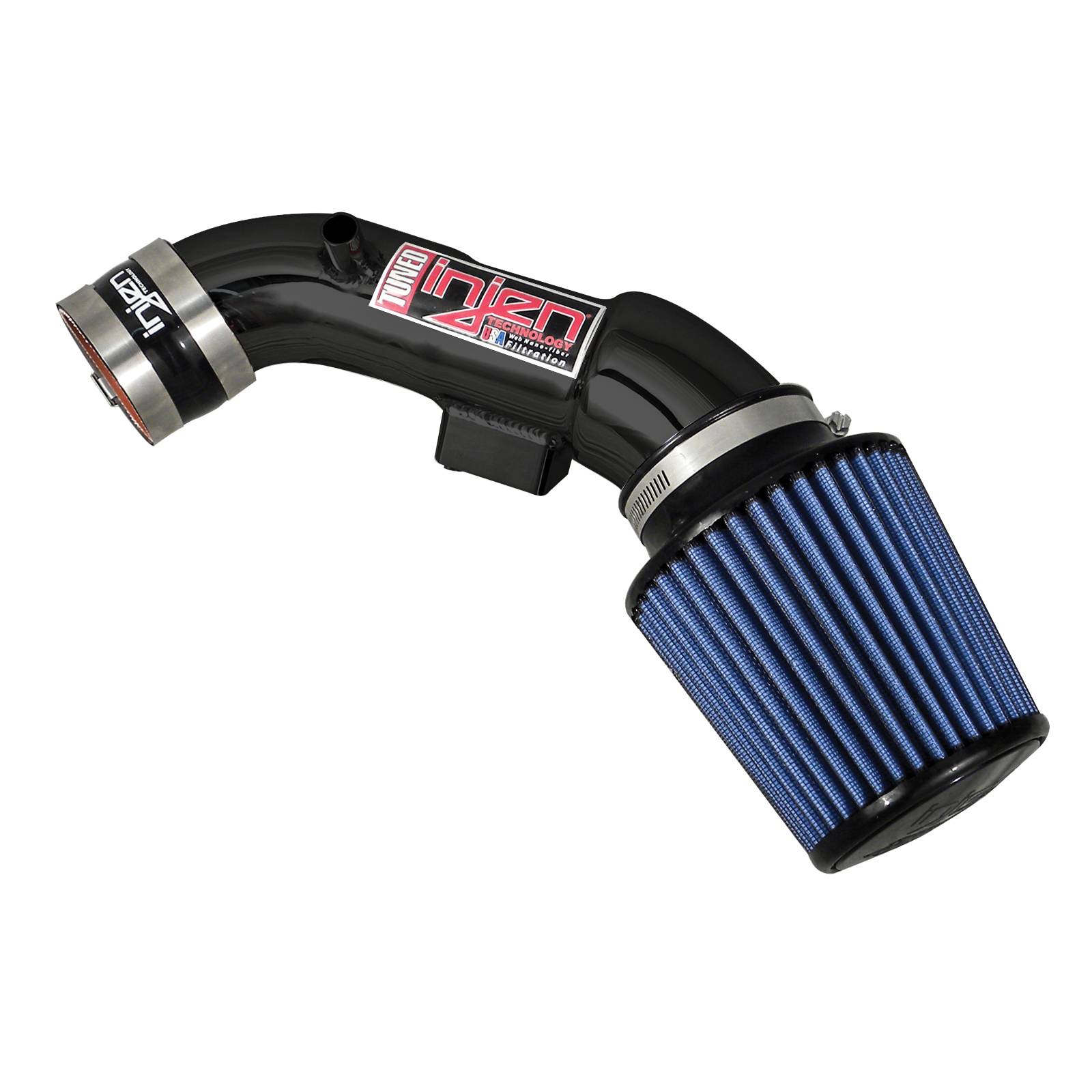
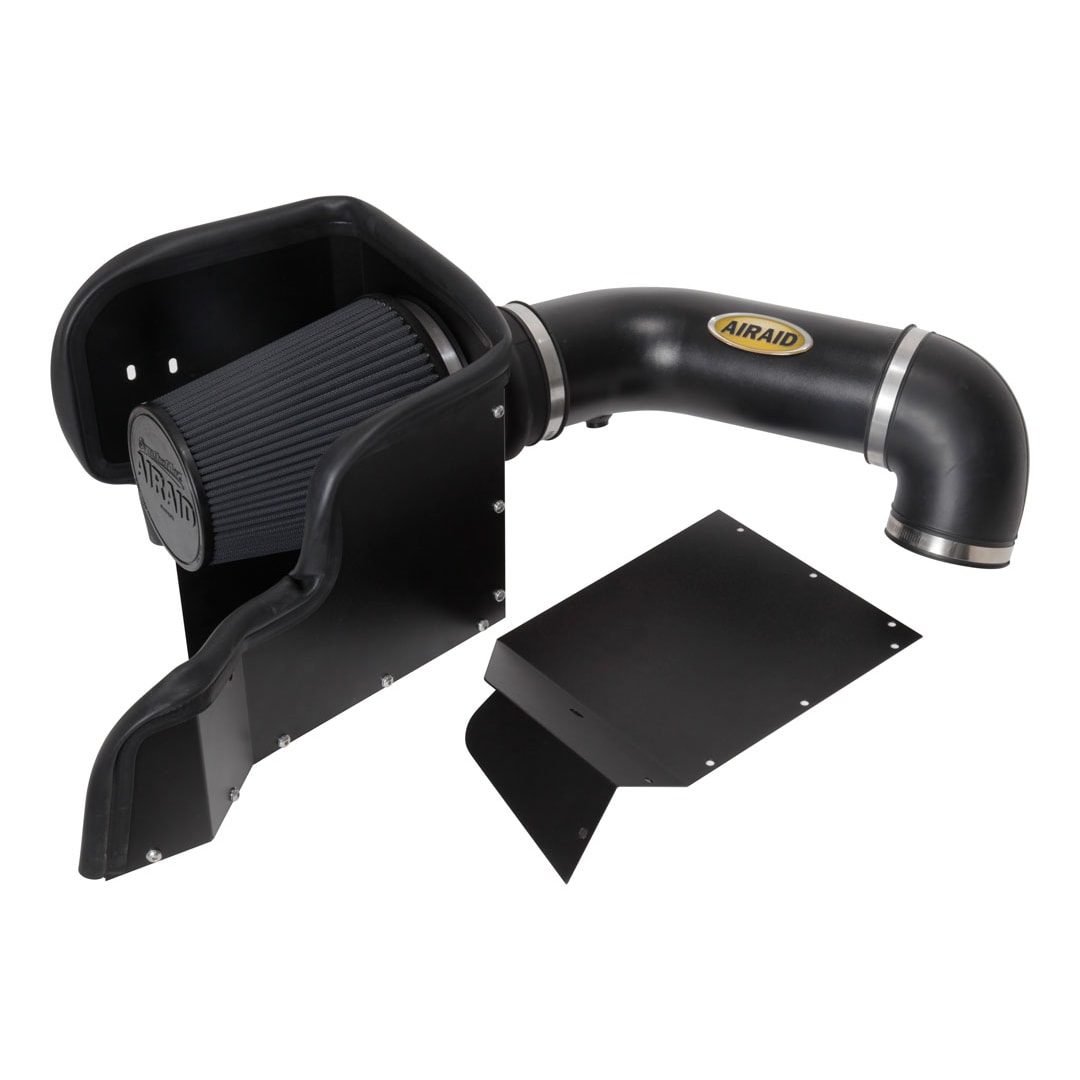
A ram-air intake is any intake design which uses the dynamic air pressure created by vehicle motion, or ram pressure, to increase the static air pressure inside of the intake manifold on an internal combustion engine, thus allowing a greater massflow through the engine and hence increasing engine power.
Design features
The ram-air intake works by reducing the intake air velocity by increasing the cross-sectional area of the intake ducting. When gas velocity decreases the pressure is increased. The increased pressure in the air box will ultimately have a positive effect on engine output as more oxygen will enter the cylinder during each engine cycle.
Ram-air systems are used on high-performance vehicles, most often on motorcycles and performance cars. The 1990 Kawasaki Ninja ZX-11 C1 model used a ram-air intake, the very first on any production motorcycle. Ram-air was a feature on some cars in the sixties. It fell out of favor in the seventies, but recently made a comeback. While ram-air intakes may increase the volumetric efficiency of an engine, they can be difficult to combine with carburetors, which rely on a venturi-engineered pressure drop to draw fuel through the main jet. As the pressurised ram-air may kill this venturi effect, the carburetor needs to be designed to take this into account, or, alternatively, the engine may need fuel-injection.
At low speeds (subsonic speeds) increases in static pressure are however limited to a few percent.
Aircraft
Pitot sensors are used to measure ram pressure which, along with static pressure, is used to estimate the airspeed of an aircraft.
See also
- Air filter
- Booster
- Ramjet
- Supercharger
- Turbocharger
- Diffuser (automotive)
References